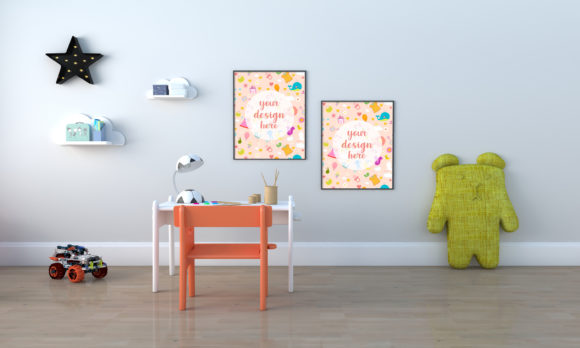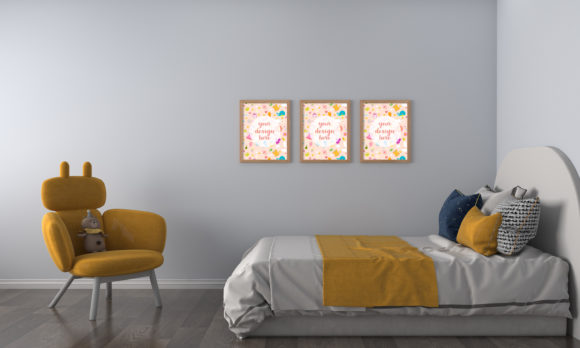
3D Rendering Kids Bedroom Empty Frames
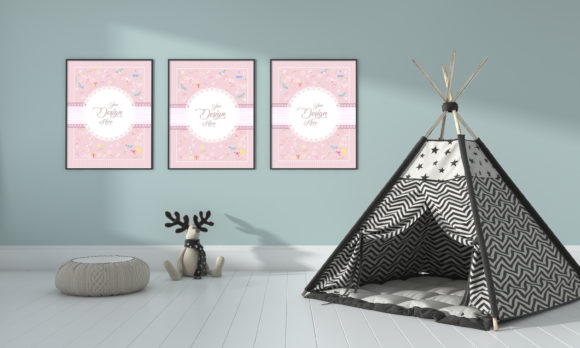
Imagine showcasing your latest children's book illustration or nursery art collection not on a blank white screen, but within a charming, sunlit 3D rendering of a modern minimalist kid's bedroom. This is exactly the creative advantage offered by a high-quality 3D rendering kids bedroom empty frames mockup. It’s a powerful design asset that transforms how you present your work, making it feel immediately tangible, professional, and contextually relevant for your audience.
Why This Mockup is a Game-Changer for Creatives
This isn't just another background image. It's a fully realized 3D interior wall mockup designed with a clean, contemporary aesthetic that appeals to modern tastes. The empty frames are the stars of the show, providing perfect placeholders for your artwork, patterns, or branding elements. For shop owners, artists, bloggers, and designers, this means you can instantly elevate your portfolio, website, or social media feed. Instead of simply stating what you create, you can show it in a beautiful, aspirational setting that resonates with parents, gift-givers, and design-savvy clients.
Practical Applications for Your Projects
The versatility of this scene is one of its strongest points. Consider using it to:
- Brand Your Business: Create cohesive social media templates for Instagram or Pinterest, ensuring every post reinforces your brand identity in a polished, consistent way.
- Present Digital Products: If you sell printable wall art, nursery decor, or digital patterns, overlaying them onto these frames gives customers a clear vision of the end product, boosting confidence and sales.
- Enhance Marketing Materials: Use the rendered scene in email newsletters, on your website's hero section, or in printed lookbooks to add a layer of professionalism and visual appeal.
- Develop Client Presentations: For interior designers or branding agencies, mockups like this are invaluable for helping clients visualize proposed artwork or color schemes within a realistic space.
The included high-resolution PSD file with Smart Object layers makes customization incredibly straightforward in Adobe Photoshop. You simply drag and drop your design into the designated layer, save, and your artwork is seamlessly integrated into the scene. The JPEG version offers a quick solution for less technical edits or for use in other graphic editors.
Tips for Choosing and Using Design Assets Effectively
When selecting any design asset, from a mockup to a premium font, a few key considerations ensure it works hard for you. First, always check the resolution; the 5000x3000px dimension here ensures your presentations look crisp on everything from screens to large prints. Second, think about mood and alignment. This modern, minimalist bedroom pairs well with contemporary, clean design styles—whether you're using a sans serif font for a logo or a handwritten font for a personal touch.
Also, consider your workflow. A time-saving asset like this allows you to focus energy on the core creative work of designing your typeface, illustration, or pattern, rather than building complex scenes from scratch. It’s a long-term investment that you can reuse across multiple projects and campaigns, providing excellent value.
Integrating with Your Overall Design Language
The right tools work together to build a strong visual identity. Just as you would carefully select a creative font that reflects your brand's personality for logo design or packaging, choosing a mockup that aligns with your aesthetic is crucial. This 3D rendering provides a neutral yet stylish canvas. It won’t compete with your primary artwork but will frame it in a way that feels intentional and curated. Think of it as part of your broader toolkit, alongside your chosen commercial font and color palette, all contributing to a cohesive and professional brand identity.
Ultimately, the goal of any design asset is to make your work shine brighter and communicate more effectively. A well-chosen mockup scene does exactly that, offering a simple path to more engaging presentations and marketing materials. It’s a small step that can significantly enhance how your creative output is perceived, helping you connect with your audience in a more meaningful and visually compelling way.